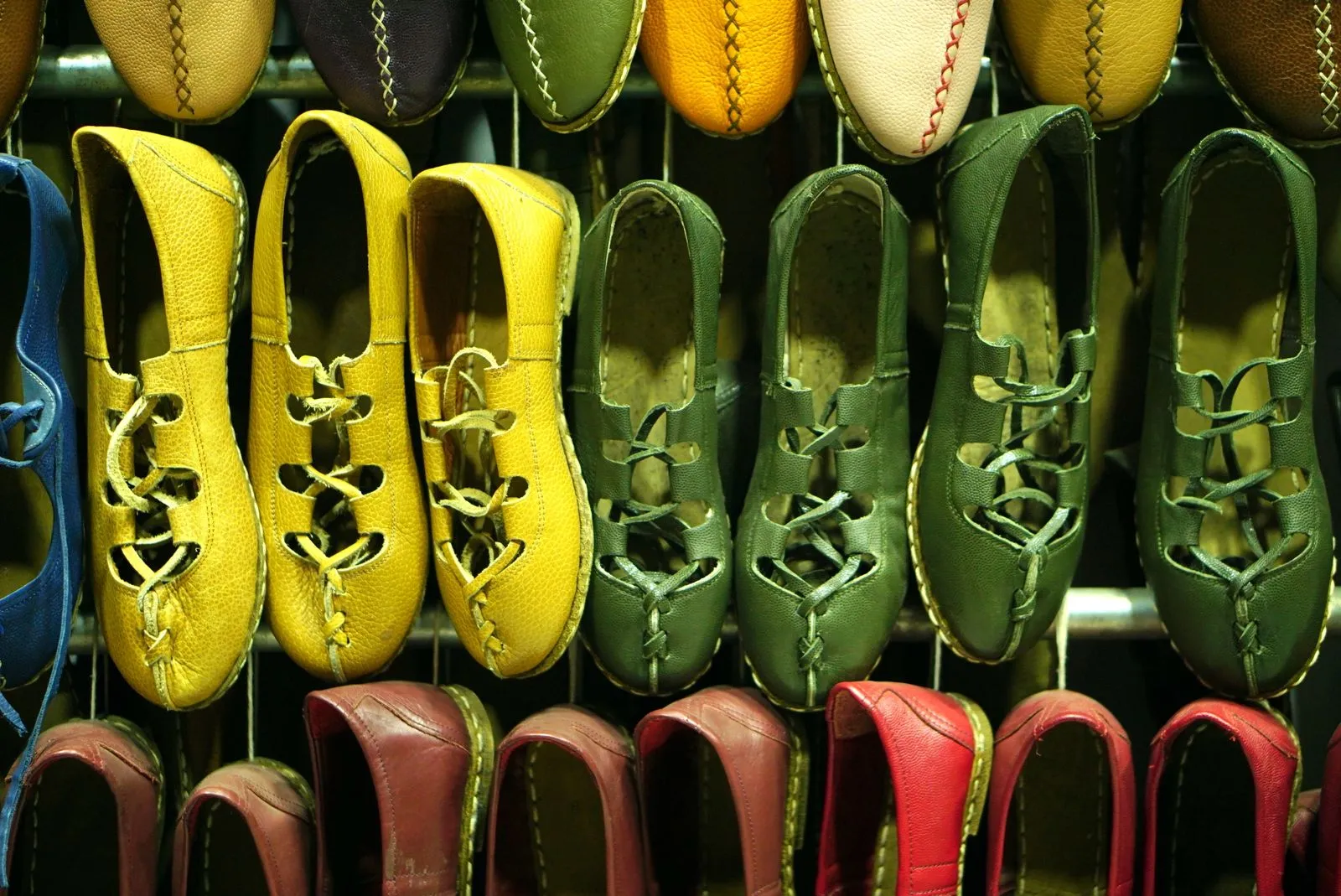
A well-made shoe should feel secure without squeezing your foot. When trying on handmade shoes, pay attention to three things: space for your toes, how firmly the heel stays in place, and whether pressure builds anywhere as you walk. Fit can feel different from one style or material to another, so don’t rely on the size printed inside alone. A careful try-on—and a few minutes of walking—can help you decide whether the shoes feel right or need guidance.
Check Toe Room
Stand with your weight evenly distributed while wearing the socks or hosiery you expect to use with the shoes. Your toes should have room to rest naturally and move slightly. They should not press against the front or feel pinched at the sides. A pointed shape may give the toes less visible space, but it should not create painful pressure.
Walk a few steps and notice whether your toes slide forward or hit the front when you stop. Feet can swell during the day, so try shoes later in the day when possible. If one foot is larger, judge the fit by that foot and consider whether the other needs a modest adjustment.
Look for Heel Hold
The shoe should stay on your heel as you walk, without clamping down on the back of your foot. A little movement can happen in new leather shoes, especially before the materials soften, but repeated slipping may cause rubbing or blisters. Check both feet; a shoe that feels secure on one side may move on the other.
Try walking at your usual pace, then turn and take a few steps in the opposite direction. Notice whether your heel lifts noticeably or the shoe shifts sideways. Don’t assume you can solve a poor fit by tightening laces or adding an insert; ask whether the style can be adjusted and whether that change is suitable for your foot.
Pay Attention to Feel
A snug, supportive feel is different from pain. Look for sharp pressure, numbness, burning, or a hot spot that grows as you walk. Also notice whether the sole bends where your foot naturally flexes. New shoes may feel firmer than familiar ones, but discomfort should not be something you have to ignore or push through.
Try both shoes and walk on a clean, level surface before deciding. If you can, sit and stand again to see whether the fit changes with movement. Keep the tags and packaging until you understand the store’s return or fitting policy, and avoid wearing the shoes outdoors before you are sure they work for you.
Ask for Fitting Guidance
Ask for help if you feel pressure in a specific spot, one shoe fits differently from the other, or you are unsure how much heel movement is acceptable. Explain where the shoe feels tight or loose and when you notice it. A fitter can check the length and width, compare sizes, and discuss whether the shape suits your foot.
Bring the socks you plan to wear and mention any insoles or orthotics you use. Ask what changes are possible before agreeing to an adjustment, since stretching or adding an insert can affect the fit elsewhere. If you have persistent foot pain or a medical concern, consult a qualified health professional rather than relying on a shoe fitting alone.
The right fit gives your toes room, keeps the heel steady, and feels comfortable as you move. Take time to try both shoes and notice how they feel after several minutes of walking. If something seems off, describe the problem and ask a knowledgeable fitter to assess the fit before you commit.