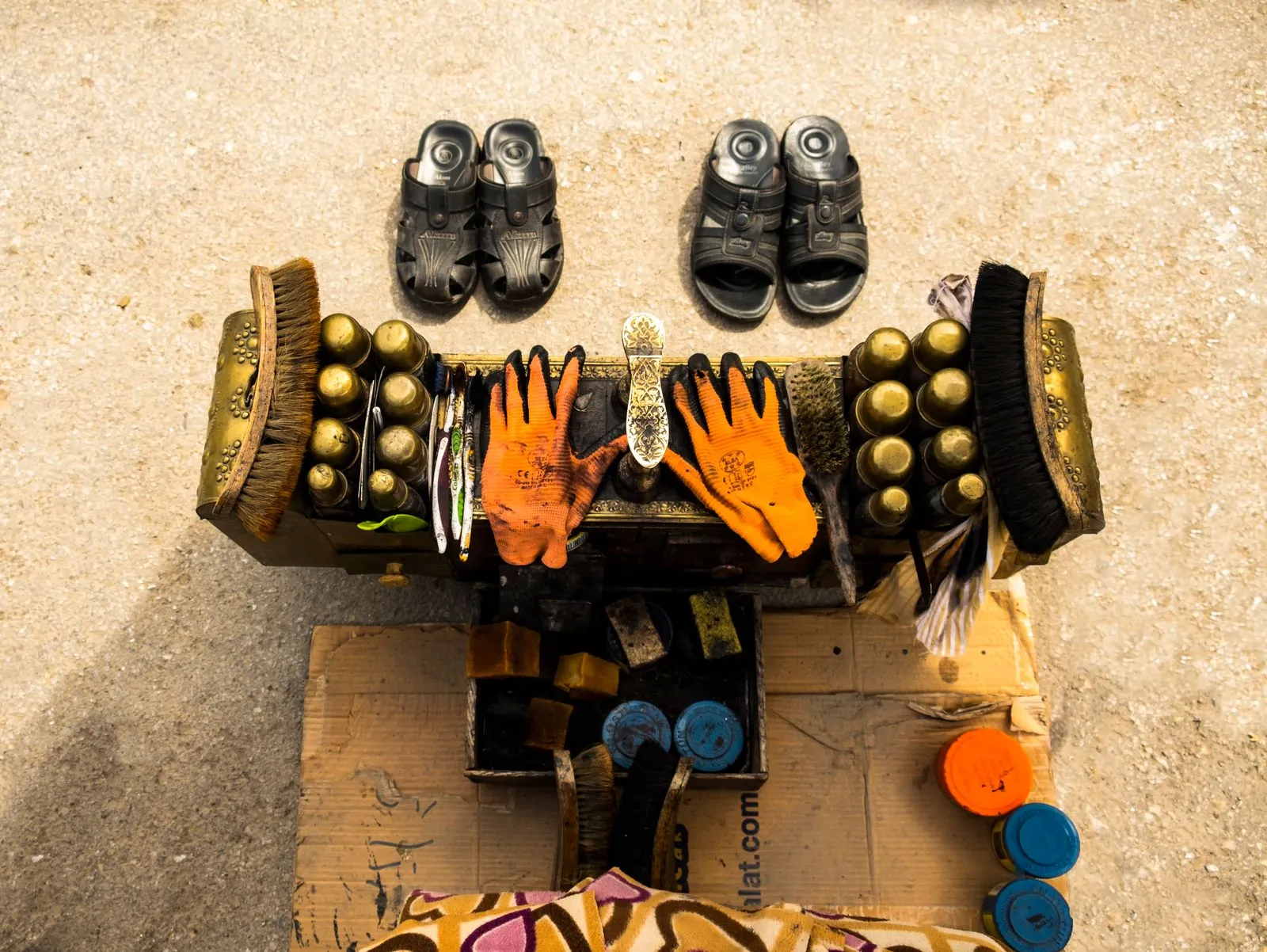
Leather shoes need regular, gentle care—not a complicated routine. Dust and grit can dull the finish, while excess water or heat may dry or damage the leather. A few useful habits can help keep shoes clean, comfortable, and ready to wear: brush them after use, address stains carefully, condition only when the leather needs it, and let shoes dry naturally. The right approach depends on the leather and finish, so check the maker’s care instructions before applying a product.
Brush Before Cleaning
After wearing leather shoes, use a soft horsehair brush or clean, dry cloth to remove surface dust. Pay attention to seams and welt edges, where grit can collect. Brushing regularly keeps dirt from building up and helps preserve the finish without adding moisture or product.
For heavier dirt, wipe the shoes with a slightly damp cloth, then dry them with a soft towel. Do not soak the leather or scrub hard. If you encounter salt marks, mud, or an unfamiliar stain, follow the manufacturer’s guidance or ask a shoe-care professional before trying a strong cleaner.
Condition Only When Needed
Conditioner can replenish some of the oils that keep leather supple, but using it too often may leave shoes greasy or darken the color. When the leather looks dry or feels less flexible, test a small amount on a hidden area first. Let the test patch dry fully so you can check for changes.
If the test looks good, apply a thin, even layer with a soft cloth and follow the product directions. Use products made for the shoe’s specific leather. Suede and nubuck need different care from smooth leather, and creams or oils intended for smooth leather can flatten their texture or leave marks.
Dry Shoes Slowly
If shoes get wet, blot away moisture with a clean cloth and leave them to air-dry at room temperature. Keep them away from radiators, heaters, hair dryers, and direct sunlight. Fast, intense heat can dry leather unevenly and may cause it to stiffen or crack.
Remove the insoles if they come out easily, and loosen the laces to improve airflow. Cedar shoe trees can help absorb moisture and maintain shape, but do not force a shoe tree into a wet shoe. If you do not have one, loosely stuff the shoes with clean, unprinted paper and replace it as it becomes damp.
Store Them With Care
Before putting shoes away, brush off dirt and make sure they are completely dry. Store them in a cool, dry place with room for air to circulate. Avoid leaving them in a damp closet, a hot car, or a sealed plastic bag, where moisture or heat can harm the leather.
Use shoe trees to support the shape between wears, or store shoes in breathable cotton bags or their original box. Rotate pairs when possible so each pair has time to air out. Keep leather shoes away from household cleaners and other products that could spill or transfer onto their finish.
A soft brush, careful drying, occasional conditioning, and breathable storage cover the basics of leather shoe care. Always test a new product in a hidden spot and use care made for the shoe’s material. For guidance on choosing leather-care products, visit Pasadena Made Shoes in Pasadena.